
Jagiellonian University Botanical Garden
The Jagiellonian University Botanical Garden in Kraków was founded in 1783 and is the oldest in Poland. It covers 9.6 hectares and holds about 9,000 taxa. It began as a Baroque layout of about 2.4 hectares beside the department of chemistry and natural history.
From a 2.4-hectare Baroque plot to 9.6 hectares
The garden stands at ul. Kopernika 27, 31-501 Kraków, and is a department of the Institute of Botany. The English page dates the foundation to 1783 and calls it the oldest botanic garden in Poland. It started as an auxiliary unit of the department of chemistry and natural history. Jan Jaśkiewicz, 1749–1809, was the first professor of natural history and the first director. The first layout covered about 2.4 hectares and was a Baroque park with plants in geometrical beds. Glasshouses built in 1786–1787 held tropical plants. In 1809 Alojzy Estreicher, 1786–1852, became director. The collection then stood at over four thousand species and varieties. Between 1819 and 1825 the ground grew to 3.6 hectares, with new glasshouses and new collections. In the 1860s the Kraków garden was among the richest in plants in Europe. Ignacy Rafał Czerwiakowski, 1808–1882, was director, and Józef Warszewicz, 1812–1866, a traveller and plant collector, was inspector, the chief gardener. He brought many thousands of plants from South and Central America. Catalogus plantarum of 1864 listed 9,470 species and varieties, including 3,779 glasshouse plants.
In 1878 Józef Rostafiński, 1850–1928, a specialist in algae and myxomycetes and a historian of botany, took the Department of Botany and the garden. He built a botanical laboratory, and in 1882 a new iron-and-glass palm house went up. Marian Raciborski, 1863–1917, held the post from 1912 to 1917. Władysław Szafer, 1886–1970, became director in 1918 and stayed 42 years. The page says the present shape of the garden is his work: new glasshouses, and new ground, until in the 1960s the area reached the present 9.6 hectares. A botanic garden museum opened to the public in 1983. Its collection is about 5,000 items: exotic fruits, seeds, wood, fossil plants, old teaching equipment, and an archive of the history of Polish botany. The living collection is about 9,000 taxa. Research follows the institute: taxonomy, plant geography, ecology, history of botany, and protected and endangered plants, especially in the Carpathians. Teaching is described as the basic function, for university students and for primary and secondary schools.
Outdoor sections
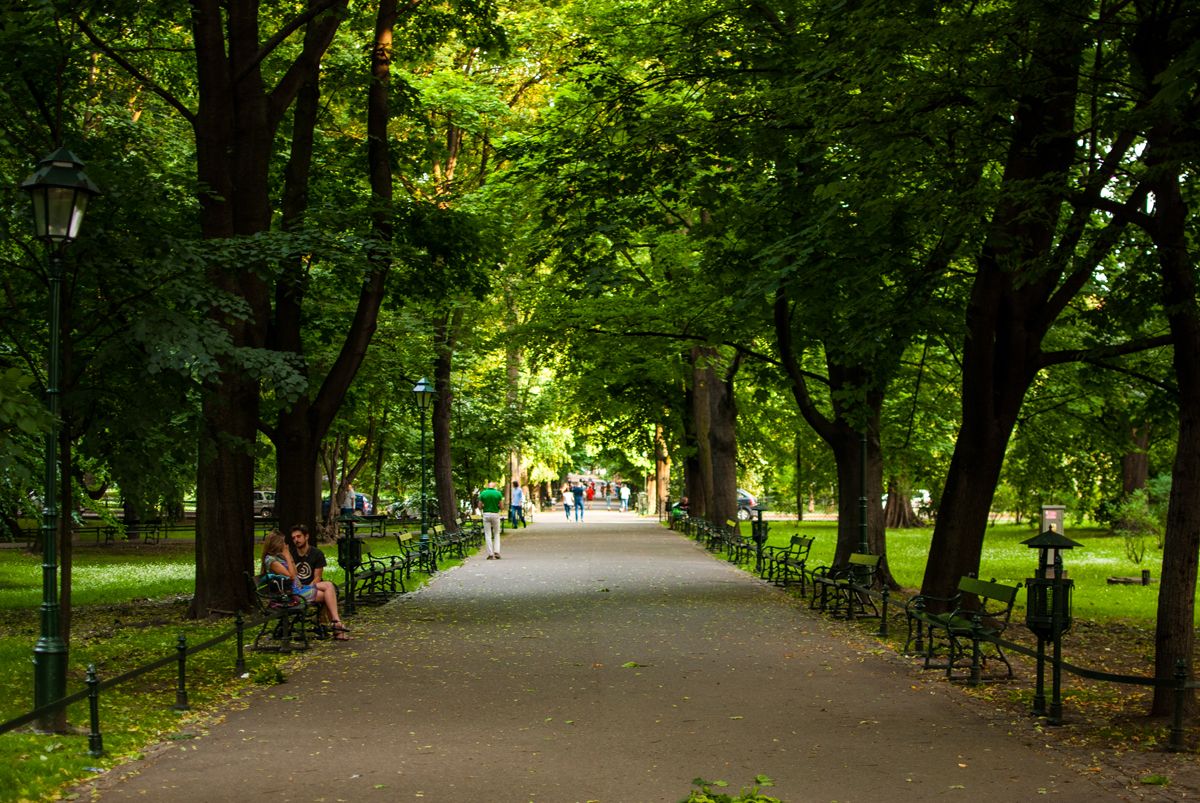
The taxonomy section is meant to show relations among species and the main divisions of the plant kingdom. A group of protected and endangered plants of the Polish flora holds species that need protection in the wild. The genetics and variability section takes up Mendel’s laws, hybridisation, and how new species or forms arise. The flower-ecology section shows pollination and how flowers fit different pollinators. The morphological and ecological section covers seed dispersal and features that come from living in particular conditions. The medicinal-plant section also holds vegetables, fruits, seasoning herbs, fibre crops, dye plants and honey plants. Alpine gardens imitate high-mountain conditions and keep mountain plants. Water plants of temperate regions, mostly native, grow in artificial lakes and pools. The arboretum, trees and shrubs, covers the largest area. Part of it is a landscape park. Geographical groups hold trees from East Asia and from North America, and there are ornamental groups, including lilacs.
Three glasshouses, one of them shut to visitors
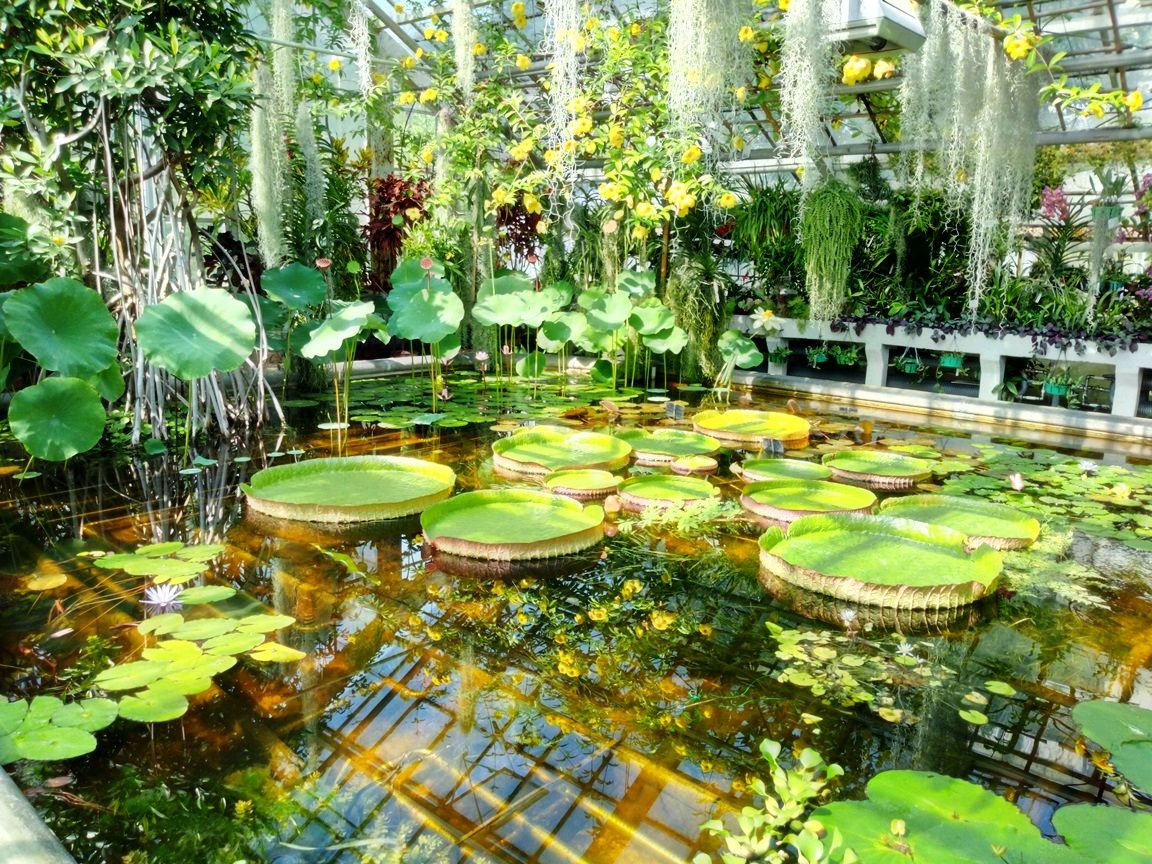
Tropical plants are kept in three glasshouses. Victoria has existed since the beginning of the garden and is named for the water plant in its pond. Holenderka, the Dutch house, is a small glasshouse for epiphytes, orchids and other rare plants that are kept out of public reach. The page says this house is closed to visitors. Jubilee is a palm house and a long hothouse split into compartments. The name marks the 600th anniversary of the Jagiellonian University in 1964, when the glasshouse opened. A separate notice says that from Tuesday 20 October, work in the Victoria house to prepare the collection for winter keeps that house closed to visitors, with reopening planned for 9 November. The wintering area inside Victoria is closed until May 2027. On Mondays the museum and all glasshouses are closed except the Warszewicz Orangery. The garden itself is closed on 1 November, 24–26 December, 31 December and 1 January.
FAQ
Who with a disability certificate enters free?
Minors up to 16 with a disability certificate, together with a carer. A person in the former invalidity group I, treated as a severe disability, together with a carer. A person in group II, treated as moderate, and a person in group III, treated as mild. The pages do not describe a lift or a step-free route through the glasshouses.
How do I get there, and where does a bicycle go?
The garden is at ul. Kopernika 27, by Rondo Mogilskie. Trams stop at Rondo Mogilskie and buses at Lubicz. No line number is printed. The garden has no car park of its own. Cars can be left on ul. Kopernika, which the page says is difficult because of the neighbouring hospitals. Bicycles are not allowed in the garden. They can be left in the racks in the courtyard of Collegium Śniadeckiego, in front of the entrance. The page asks visitors not to park against the fence.
What is forbidden once you are inside?
Picking or destroying plants and collecting seeds, leaving the marked routes, alcohol, dogs, and entering during a storm or a strong wind. Commercial photography is not permitted. Staff instructions apply. The garden says it is not responsible for the results of touching or picking plants. Tickets must be shown when staff ask. Cash or card at the office, or online at bilety.uj.edu.pl. The phone is +48 12 663 36 35 and the email is hortus@uj.edu.pl.